Showing posts with label San Francisco. Show all posts

Saturday, October 14, 2006

Saké Day Part Two

Saké Day Part Two, A recap of Nihonshu no Hi

True Sake hosted their second annual Sake Day celebration at Fort Mason this past October 1st and I'm happy that I had the opportunity to be there and join in the festivities. See the Sake Day website for details and great photos.

The fun started at the registration table as we signed in and picked our colored necklaces (mine was red!). Being a True Sake newsletter devotee, I knew that later in then evening there would be drawing and the color of your necklace would determine which of four sakés you would be trying. The welcoming reception was great - outside the Firehouse with a view of Alcatraz along with live music, we were served Chikurin Karoyaka "Bamboo Forest," a newly imported saké from Okayama Prefecture (Junmai Ginjo milled to 50%, smv +3, acidity 1.40). It was delicious and Beau Timken was a gracious host, keeping glasses filled. I tried to be restrained because I knew what lie ahead...

Inside we were seated and Beau offered a few words of wisdom. After reading his newsletters, I thought he seemed like a nice, funny, sincere, obsessed man. In person his truly big personality shines. He's very witty, very fun and very enthusiastic (but not stuffy) in his passion for saké. If this man can't bring saké to the American masses, no one can. He started the evening off with a raffle and my table won 2 bottles of Karen Coy (smv -23, acidity 2.9, alcohol 10-11%) which we dove right into to get things going.

I loved the way the evening was set up. Dinner courses (catered by Mari's Catering) along with accompanying saké were brought out one at a time, yet the dinner was casually paced and people were free to get up throughout the meal to visit the four saké stations set up at the back of the room and in a side room. The menu included:

Assorted nigiri sushi (maguro, unagi, salmon with yuzu tobiko, escalore with wasabi tobiko) and an-kimo (steamed monk fish liver in lemon cups with lemony ponzu)
*Shirataki Jozen Mizunogotoshi "Pure flavor" Tokubetsu Junmai from Niigata Prefecture (smv -1, acidity 1.4). Very clean in the typical Niigata style with a quick finish.

Noshi-dori (baked chicken) served with teriyaki sauce and tomato basil sauce, asparagus served with vinegar miso
*Takenotsuyu "Bamboo tears" Junmai from Yamagata Prefecture (smv 2, acidity 1.4). Less sweet; savory

Bacon wrapped shrimp in Nigori (sak
e) cream sauce, wasabi mashed potatoes
*Tsukasabotan "Tosa Space Sake" Junmai Ginjo from Koichi Prefecture (smv +5, acidity 1.5). This course was dubbed "Pigs in Space" by Beau who had this to say about the saké: "This sake was made using ingredients from outer space. Well sort of, in fact, it was made with brewing yeast that was sent to space on a Russian rocket. Did zero gravity have any effect? You make the call on this dry Ginjo that has a nose filled with steamed rice, whipping cream and green veggies tones. Think dry 0 as this celestial sake is clean, soft and shimmering with an overall dry earthiness that hides a hint of dry fruit elements. As close to the sake gods as one can get..."

Deep fried tilapia, peppers, and onions marinated in spicy vinegar, steamed stuffed daikon
*Narutotai "Beau-shu" Nama Ginjo Genshu from Tokushima Prefecture (smv +5, acidity 1.7). This was one of my favorite sakes - it comes in a can! but it tastes FRESH.

Beef marinated in miso and sake, edamame rice, Japanese pickles, Japanese custard
*Masumi "Yamahai Tsukuri" "Autumn Yamahai" Yamahai Junmai Ginjo from Nagano Prefecture (smv +2, acidity 1.8)

Sake creme brulee topped with sake blueberry sauce, green tea with gold flakes
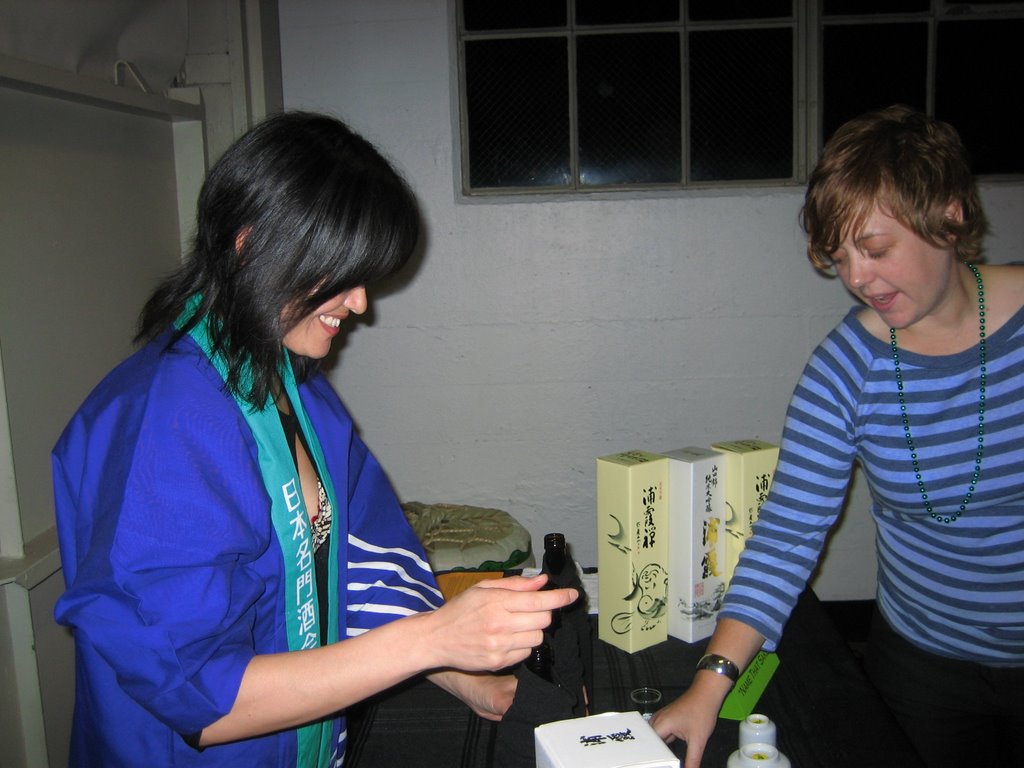

The saké stations were all about testing your saké tasting skills.

Sak
é Station #1 was "Name that sake" and you were given 3 brews by a True Sake favorite brewery, Irakasumi. We tasted a Junmai, a Junmai Ginjo, and a Junmai Dai Ginjo. Despite receiving (from a mysterious, guru-type man) the excellent advice to "think of a fresh, clear, running stream" when thinking about the Junmai Dai Ginjo, I got all of these wrong! Well, I wasn't the only one and I got to this station at the very end of the evening - that's my excuse. I want another chance!

Sak
é Station #2 was called "Sake experiment" and here we got to play a "sake scientist" and discover how saké degrades over time. We tasted 2 sets of saké that had been inadvertently aged (meaning that the brewer intended that these saké be drunk fresh) and, to make it a bit more interesting, two of the saké had been opened on Sake Day 2005, exactly one year ago. So, we had:

Daishichi Kimoto Honjozo 1999
Daishichi Kimoto Honjozo 1999 - opened in 2005
Daishichi Kimoto Honjozo 2000
Daishichi Kimoto Honjozo 2000 - opened in 2005

I think I may have noticed more similarity in the sak
é opened last year than others. I definitely felt that you could see the relationship there. Others thought the saké opened in 2005 was really off, some were even a bit disgusted by it. I mainly thought it tasted flatter and sweeter. What the hell, no one got sick. This means don't throw out that saké that you opened last month and then forgot about before you give it a try... I didn't hear anyone really complain about the 1999 and 2000 sake that hadn't been opened, so, although the taste likely changed greatly from what the brewer had intended, old saké can still be worth drinking.

Sak
é Station #3 was a "Blind Tasting." At this station, six bottles were offered and everyone was told to choose their favorite. Another bit of fun: two of the sakés were the same! I did this station early in the evening and I was able to correctly guess the two identical sakés.

Sak
é Station #4 was called "Madhouse Sake" and it offered three sakés that were called "a little bit crazy." First was a Junmai Dai Ginjo that was left in a True Sake window for 5 months and a bottle of the same saké that had been stored properly. To me the exposed saké had an off smell and tasted similar, but lighter. Next, we tried a Kikusakari Gekkakow "vintage" saké which was aged by the brewery for 3 years. Finally, were tried a sparkling saké from Okunomatsu. This was made for Formula One racers to spray on each other in the victory circle at the Japanese Formula One races. I liked this light, bubbly saké.


And finally, "The Necklace Finale." Everyone would get a final sak
é, but which one would it be??


Kamenokou 17 milled to 17% $850/bottle
Kakunko milled to 27% $150/bottle
Dassai milled to 23% $70/bottle
Fu-Ki $4.95/bottle

I had a red necklace and I was a first runner up with the Kakunko. This was phenomenally delicious and I would definitely buy some of this for a special occasion. A highlight of the evening came when my wonderful tablemate David offered me not one, but TWO SIPS of his first prize Kamenokou. I must admit that I looked at David and asked "is it worth it?" I can't quote exactly what he said, but he reminded me that sak
é is more than just a bottle of alcohol with a price and more than a "good" or "bad" taste. Whether a saké is "good" is determined by a combination of the love and care that the brewer put into making it, the personal tastes of the taster, the occasion at which you drink it and the people who you drink it with. So, yes, this sake was worth $850 a bottle.






Monday, October 02, 2006

Saké Day Part One

A day full of saké plus something from yesterday that I forgot.

Well, I didn't really forget, I merely neglected to mention because it wasn't in my saké notebook. True Sake! First of all, either tales of parking woes are exaggerated or we were very lucky to get a spot within a couple blocks. The storefront is narrow, so it might be easy to miss if driving by, but we found our way and I was not dissapointed. There were several customers in the store and the workers were so friendly. I had a list of a few specific sakés that I needed to find and they led me right to them. Then I spent time just looking at every bottle and every description. I bought several bottles and might have bought more if not for the current restrictions on liquids in carryon bags for air trips. Also not to be missed is the gorgeous collection of saké-related glassware. I was happy to find the hammered glass cups that I saw in Beau's book "Sake: A Modern Guide."

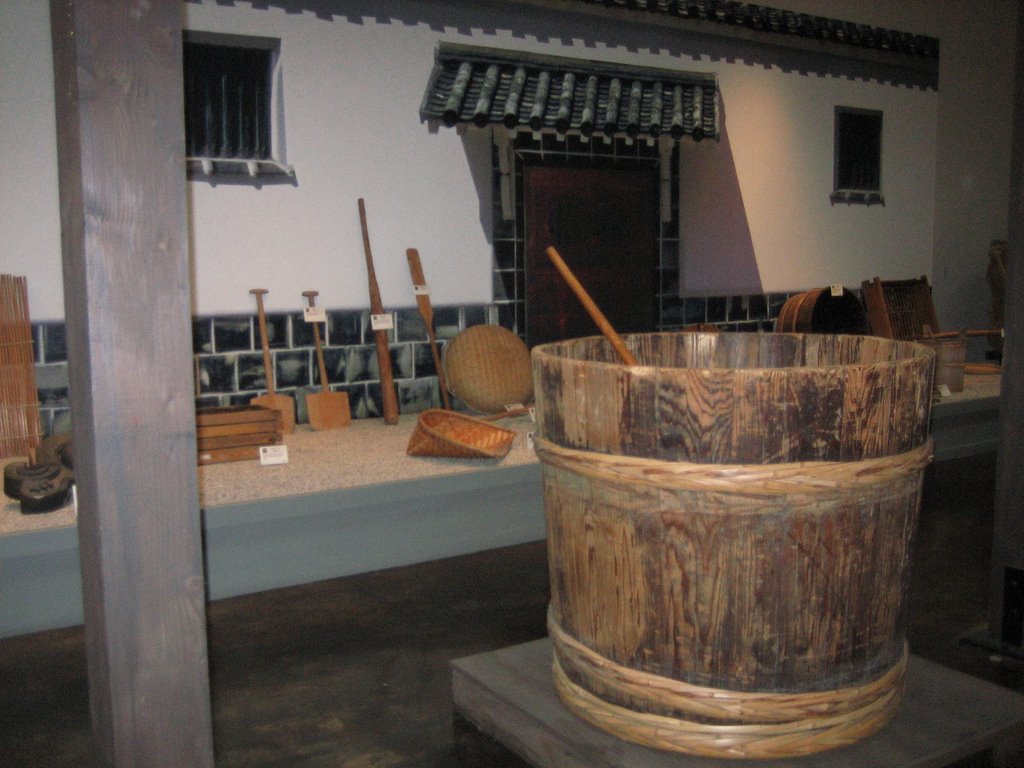
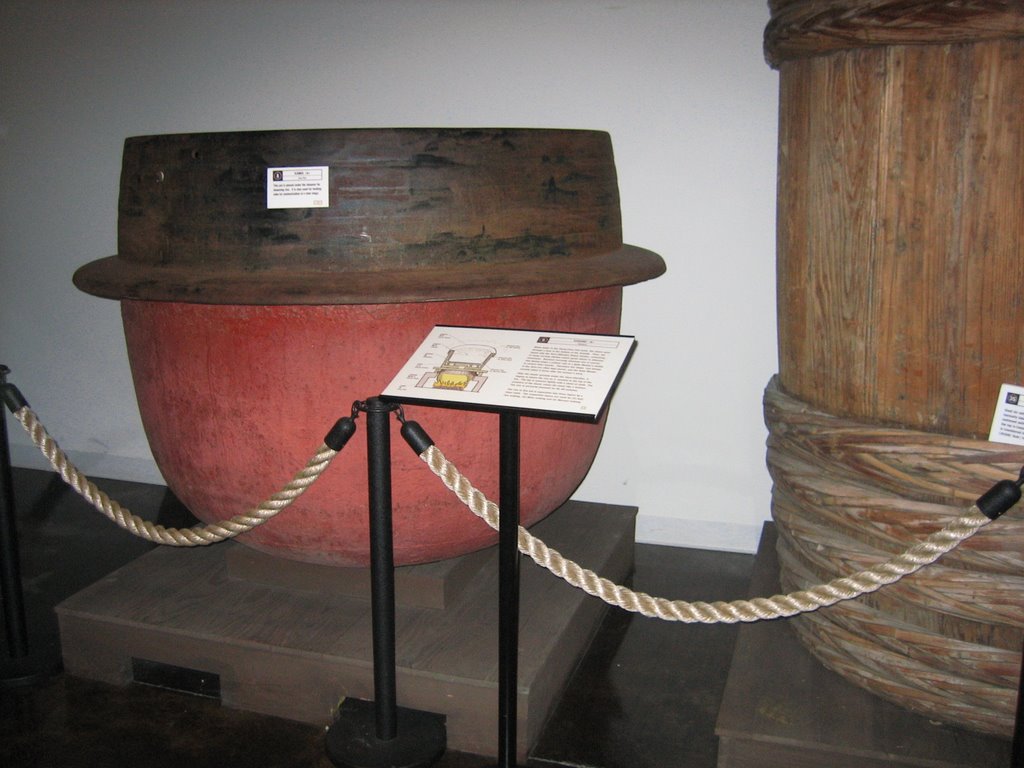
Thanks to my friend Rick, later in the afternoon I was able to get to Berkeley and to Takara Sake USA. The highlight of the visit, besides the generous, free tasting, was the museum. It was a great opportunity to put good visual images to alot of the things I've read about the history of saké making.

Takara's web site says:
The Museum features items and displays of interest to both experts and the general public. It includes an exhibit of the historical saké-making process, saké artifacts and implements collected by Takara Sake USA, and a history of saké-making in America. The collection is the only one of its kind in the U.S.A.

They have a very useful diagram illustrating the process of saké making in the 19th century with items which the museum owns an example of conveniently labeled. They also have a similar example of this on their site.

I was excited when I saw several old books. Unfortunately, they mainly consisted of old brewery ledgers with no illustrations.


As for the tasting, they have a menu for the day listing the daily available choices. I lost track of how many sakés I tried because when the friendly lady behind the counter found out that I was very interested in saké "just for fun," she became very generous and let me try the majority of the items on the menu plus a few other things.

Some things that I tried with a few comments:

Sho Chiku Bai nama
Sho Chiku Bai organic nama (superfresh, alive, green)
Sho Chiku Bai nigori creme de sake (creamy, white chocolate liqueur, thick)
Sho Chiku Bai nigori (thinner than creme de sake, sweet, pina colada)
Sho Chiku Bai Tokubetsu Junmai (sharp but smooth, prominant alcohol taste)
Shirakabe Gura (tokubetsu junmai, imported)
Sho Chiku Bai Ginjo
Takara Sierra Cold
Plus a plum wine and several flavored sakes (fuji apple, lychee, raspberry, and plum)

Sake Day Part Two (a description of the True Sake Nihonshu no Hi festival!) will follow shortly.

San Francisco Saké Vacation, Part 2

I decided to pass by saké for lunch today because I was reminded of another true love...dim sum at Yank Sing. I believe that I could have ordered saké at Yank Sing, but I didn't even consider it. Green tea seems to be called for with dim sum. We had Shanghai dumplings (yum!!), bbq pork buns, ha gau, pork shu mai and who knows what else.


I made up for a sakéless lunch with dinner at Hana Zen. This is a wonderful place to try saké as the menu is quite respectable, the staff is very friendly and knowledgeable, and they seem excited that you are interested in saké. The saké menu is very helpful with pictures of the labels of each sake and good descriptions. My friend and I decided to share two saké flights, the junmai daiginjo set and one of two junmai ginjo sets. Our server showed us where in the menu we could find the descriptions of the sakés in our sets and made a point of asking our opinions on all of them. I've marked my favorites with an *.


Junmai daiginjo flight ($24.00): Kubota Manjyu (served room temp), Kubota Hekijyu* (served room temp), Kanchiku

Junmai ginjo flight ($18.00): Suigei*, Dassai, Kikusui


After Hana Zen, we were reluctant to declare the night over, so we walked around downtown a bit and decided to have a drink at the bar at Farallon. They have a great wine list which includes one saké, Kanbara "Bride of the Fox" junmai ginjo $10.50/glass. I had a glass, which may or may not (ok, NOT) have been a good pairing with their Cinnamon Apple Cake. I've had Kanbara before and liked it and the Apple Cake was extraordinary. A good example of when two rights make a wrong!

Saturday, September 30, 2006

San Francisco Saké Vacation, Part 1

I love San Francisco. I lived there for a year and was sad to leave and I'm very happy any time I get to visit. So, when I heard that on October 1st, True Sake would be celebrating Nihonshu no Hi (Saké Day), I bought a ticket and booked my flight. My plan was to stay for a few days and try some new saké every day.

On Friday, my first day in town, I managed to try five different sakés. Really, I was on a mission during this trip and I wasn't going to let silly thoughts such as, "should I really be drinking this early in the day??" slow me down.

The House
The House is in a nice little space right at the edge of Chinatown and North Beach. They offer only one saké by the glass, but it's a good one. I've had enough saké now (but I'm still unfamiliar enough with Japanese) that I am having a pretty difficult time keeping saké names straight. I didn't recognise Meibo "Yowanotsuki" junmai ginjo, which is also known as "Midnight Moon." When I got back to my computer and put two and two together I was excited because I knew that I had a bottle at home in my refrigerator. Something to look forward to! I was happy to make the discovery because I really like this saké. The aroma is pleasant with a bit of floral, the taste was clean with prominent apple throughout and a tart finish. It seems to be a good choice to match with a variety of foods, therefore not a bad choice for a restaurant to offer if they are only going to offer one by the glass. I had the white shrimp and Chinese chive dumplings which came with a tart, tangy sauce and the deep fried salmon roll with Chinese hot mustard. The House also offered a 750 ml bottle of San Pellagrino for $4.00 which I could hardly believe. Most places charge $4.00 for the little bottles.

Meibo junmai ginjo
Rice: Yamadanishiki polished to 50%
SMV +2
Alcohol 15.8%
Acidity 1.5
Amino Acid: 1.2


Ozumo
Later that night, I had a wonderful meal at Ozumo. This evening truly brought home to me the difference between "drinking" saké and "tasting" saké. At the beginning of the meal I wrote in my notebook: "Wakatake Daiginjo Onikoroshi (Demon Slayer) 'beautifully sound, round and alluring saké with a silky texture and slight sweetness stemming...'" The quote is from the menu and I didn't even finish writing the quote and that was it for the night. I was there with an old friend and the saké was flowing and, really, taking notes or even thinking logically about aromas and tastes was far from my mind. Well, I don't regret it. I can sort of recreate the evening from the itemized check: butternut squash miso soup, miso soup, bluefin sashimi, hamachi sashimi, spider roll, ikura sushi, Voss sparkling water, 1 glass Wakatake daiginjo, 1 glass Kamoizumi daiginjo, 1 glass Dewa 33, 1 glass Dewazakura Oka.

Dewa 33 & Dewazakura Oka specifics (also see True Sake's newsletter of April '06 for a good writeup of both):

Dewa 33
Polishing rate 50%
SMV +4
Alcohol 15.8%
Acidity 1.4

Dewazakura Oka "Cherry Bouquet"
Polishing rate 50%
SMV +5
Alcohol 15.5%
Acidity 1.2

Wakatake daiginjo (I later realized that this saké was recommended by one of my tablemates at Sake Day as his anytime saké and a brief search of the internet for other people's opinions shows that many others agree)
Polishing rate ?
SMV +/-0
Acidity 1.4

Kamoizumi daiginjo
Polishing rate ?
SMV 1.5
Acidity 1.2