Wednesday, January 09, 2008
What's hot and what's not
A new list of what's hot and what's not was just published by the American Restaurant Association. Scroll down to page six to see alcoholic beverages and cocktails. It's a bit sad to see that sake ranks below energy drink cocktails and mojitos, but interesting that it's ahead of red, white and sparkling wine, vodka, tequila and rum. I found this link on Andrew Zimmern's food blog. He also posted this link to a youtube video of Kobayashi going up against a bear in a hotdog eating contest. It looks like it was an unfair competition!


Tuesday, November 13, 2007
Another Minneapolis event: December 5th

DECEMBER 5th EVENT: SPARKLING AND SUSHI!
TICKETS ON SALE NOW
What : "Sushi & Champagne Tasting"
When : Wednesday December 5, 7-9pm
Price: $38
Where : Nami, Downtown Minneapolis at 241 1st Avenue North
(corner of 1st Ave North and 3rd Street)
Buy Tickets at tc-uncorked.org
Time once again for our annual "Sushi & Sparkling" event to get you into the holiday spirit! Swill a little sparkling wine and champagne and sample a bit of sushi and rolls from our good friends at Nami. We also hope to have a few sakis so you can try a sip of those as well. Join us and kick off the holiday season!
Looking forward to seeing you there!
Cheers!
~ Pam, Toni, Tracie, Rachel, Tom, Lana, Kelly, Mark and Jonathan
Tuesday, November 06, 2007
Sake tasting dinner at Spill the Wine in Minneapolis
This should be fun!
Sake Dinner
Presented by VinoSource, who will be sharing tasting notes on the wine for the evening and our Chef who will be discussing the food.
November 29th, 2007 | 7pm
$69/person (includes tax and gratuity)
Course One
Mango Crab Salad with Cucumber, Lime and Mint
tozai living jewel, kyoto
Course Two
Miso Tofu Soup
with Fish Stock and Green Onion
rihaku wandering poet, shimane
Course Three
Ribeye Carpacio
Thai Style, Green Papaya Red Curry
tentaka hawk in the heavens, tochigi
Course Four
Tuna Tataki
Black pepper and Pickled Ginger Rice
mukane root of innocence, osaka
Course Five
Green Tea Panacata
tozai snow maiden, kyoto
Go here to find out more about Spill the Wine and to register.
Sake Dinner
Presented by VinoSource, who will be sharing tasting notes on the wine for the evening and our Chef who will be discussing the food.
November 29th, 2007 | 7pm
$69/person (includes tax and gratuity)
Course One
Mango Crab Salad with Cucumber, Lime and Mint
tozai living jewel, kyoto
Course Two
Miso Tofu Soup
with Fish Stock and Green Onion
rihaku wandering poet, shimane
Course Three
Ribeye Carpacio
Thai Style, Green Papaya Red Curry
tentaka hawk in the heavens, tochigi
Course Four
Tuna Tataki
Black pepper and Pickled Ginger Rice
mukane root of innocence, osaka
Course Five
Green Tea Panacata
tozai snow maiden, kyoto
Go here to find out more about Spill the Wine and to register.
Friday, November 02, 2007
Oldtime saké rituals
I was cataloguing a book today by a member of the Circumnavigators Club and I found an interesting description of saké drinking at a mid-1920s Geisha-Dinner Party. I like to think of all the men getting a little rambunctious and smashing sake cups into their heads! Here is the description:
The only wine consumed during the dinner was saké, and a few words regarding this are necessary.In color, saké looks much like weak tea, and is always served hot in small shallow cups which hold about three table-spoonfuls. In taste it resembles hot sherry, and it is probable that its content of alcohol is about the same. All through the dinner saké was constantly being brought in and served to the guests. The customs surrounding its consumption are somewhat curious, and in brief are as follows:--
The first cup of wine is drunk by the guest of the evening. The host selects a cup, names the guest and says, “Dozo saké ippai onomu nasai” (Graciously condescend to imbibe a cupful of wine), at the same time touching the cup to his forehead and bowing toward the guest. The latter bows to his host, accepts the cup, touches it to his own forehead and holds it forward on the palm of his hand for the maid to fill, at the same time replying, “Arigato gozaimasu, itadakimasho,” (Thank you, I sure will). He drains the cup, rinses it out in a tureen of water which stands beside him, touches it to his forehead and returns it to his host with the request that he have one himself. Formalities satisfied, everyone else begs the privilege of a cup with the guest, and after him whomsoever he may fancy. To the uninitiated a word of caution: ‘Ware the cup that cheers in Japan, for the custom above outlined is easily capable of being carried beyond the realms of a joke, and in his desire to be polite one may learn that hot saké in sufficient quantities, and taken in small doses, “biteth like a serpent and stingeth like an adder.” Furthermore, saké does not behave well in mixed company.
JOHNSON, GEORGE A. The log of a circumnavigator being a series of informal narratives descriptive of a trip around the world. Boston: The Stratford Co. , 1927.
Monday, October 29, 2007
Trader Joe-san's Sake

Sake at Trader Joe's...who knew? On a recent trip I found two varieties, a junmai ginjo and a sparkling sake. Here are the specs and my tasting notes on each:
Junmai Ginjo Premium Sake
Alcohol 14-15%
SMV +3 (medium dry)
Serving suggestion: Chilled
Texture: Soft and smooth
Pairing food: seafood and lightly grilled meats
Produced and bottled by Oimatsu Shuzo Co., Hita
Tasting notes: The scent is very pleasant, yeasty, and full of butterscotch. Taste is light and earthy, no fruits or sweetness at all.
Sparkling Sake
Alcohol 7%
Produced and bottled by Ume no Yado Brewery Co., Nara
Tasting notes: The aroma out of the bottle is ricey and fruity. The color is a creamy yellow and the bubbles are tiny and abundant. This was less sweet than the other sparkling sakes that I've had. I think I could confidently serve this to a skeptical champagne lover, while with something like Hou Hou Shu (which I love) I'd be worried it would be too sweet.
Tuesday, October 02, 2007
An aside...
I was in Washington D.C. last week for the Rare Book School class Japanese Illustrated Books in the Edo Period, and I had the opportunity to have dinner at Citronelle. There was no sake served with my tasting menu (why not?!), but I thought the meal was worth mentioning here because it was so ridiculously delicious. I had the Promenade Gourmande tasting menu with the wine pairing:
PROMENADE GOURMANDE
AMUSE BOUCHE, egg surprise, tuna sausage, escargot crumble
Champagne A. Margaine, “Brut Premier Cru” Villers-Marmery
"A NEW VICHYSSOISE", potato flakes, leek milk
SOFT SHELL CRAB, corn risotto
Riesling Grand Cru “Rosacker”, Domaine Sipp-Mack 2004
ROCKFISH, vegetable pearls, lemon verbena emulsion
Chateauneuf-du-Pape Blanc, “Les Gallimardes,” Domaine Giraud 2004
LOBSTER BURGER
Meursault, Domaine Sylvain Dussort 2004
VEAL, black angus steak, sweetbreads, morel sauce, asparagus
Gevrey-Chambertin, “Cuvee Pere Galland,” Domaine Jean-Michel Guillon 2003
SELECTION OF IMPORTED CHEESE
Shiraz, Mollydooker Wines, “The Boxer”, South Australia 2006
RASPBERRY VACHERIN
CHOCOLATE THREE WAYS
Banyuls, “Helyos”, Domaine Alain Reynaud 2002
PETITS FOURS
Well, the cost was quite shocking, but I have to say, I'm often disappointed by expensive, extravagant meals, but it wasn't the case with Citronelle. The food really was fantasy-like as was the service. I was dining alone and they gave me a wonderful table with a great view of the kitchen and I felt like they treated me like a princess. Maybe it's time to start saving up for my next trip to D.C., because I absolutely want to go back!
Friday, August 03, 2007
Rare sake tasting event in Minneapolis: a review
- In August there was a sake tasting at Zipps Liquors in Minneapolis, organized by Jason Kallsen of Twin Cities Wine and featuring sakes imported by JoTo Sake. Here is the official description of the event:
The importer is JoTo sake, run by a fellow named Henry Sidel (a Carleton grad to boot). JoTo Sake is a specialist in importing the smallest production, truly artisnal sakes available. Many of these sakes were only available in their local prefectures. Henry's new midwest manager, Midori Roth, is flying in from Chicago for this event.
More info on their portfolio can be found at www.jotosake.com
If you've ever been curious about sake, wondered how to 'talk the talk' at the sushi bar, and were curious just how good sake can be, this will be an event second to none!
Zipps Liquors
2618 Franklin Avenue East
Minneapolis , MN 55406
612-333-8686
The tasting was great fun and it was nice to meet the Joto representatives. The sakes we tasted were:
Shiichi Hon Yari Junmai
Taiheikai Tokubetsu Junmai
Kasumi Tsuru Yamahi Ginjo
Yuki No Bosha Junmai Ginjo
Kasumi Tsuru Kimoto Extra Dry
Yuki No Bosha Komachi Daiginjo
Watari Bune Junmai Daiginjo
And a few other sakes that Zipps carries:
Rihaku Tokubetsu Junmai
Wakatake Daiginjo
Hananomai Junmai Daiginjo
Mu Junmai Daiginjo
Hakutsuru Junmai Daiginjo
My favorites were the feminine, floral Shiichi Hon Yari Junmai and the velvety (yummy!) Yuki No Bosha Komachi Daiginjo.
Monday, March 26, 2007
Sake Samurai in Tokyo (nearly a year later!)

On our first full day in Tokyo, we went to Sake Plaza, located in the Central Brewers' Union's Building in Shinbashi. This was fun, except for the fact that all of the information was in Japanese. Of course, I bought all the little sake booklets. Other purchases included a water pitcher and cups and a hydrometer to measure the smv (this is currently useless to me as I can't read the instructions). We also got sake calendars which apparently are much collected, something that sake lovers wait all year for. Upstairs there is a library with some nice exhibits, including big scrapbooks filled with sake bottle labels. The best part of the visit was finding out that later in the afternoon there would be a large sake tasting.
 There were about 325 sakes to taste and I did a pretty good job. Spread
  throughout the room were several spittoons which I laughed at at first, but by about the 5th sake I too was spitting like a pro. Mayu was with me and she is from Chiba, so we made a point of trying all the sake from Chiba. That was fun as it put a focus on the tasting that I otherwise wouldn't have achieved. All the tasters received an official "sake samurai" tasting cup, a very nice souvenir.
Thursday, March 08, 2007
Nagasaki
While visiting Nagasaki we stayed at a spa resort on Ioujima. Check out the iron kettles we sat in while looking out onto the harbor and the volcanic ash we COOKED in at the spa. We had dinner at the resort both nights, the first being a Healthy Meal, the highlight of which was collagen jelly and the second being an entire meal of various courses of fugu. We had fugu sashimi, fugu nabe, deep fried fugu and seared fugu. For this meal we brought the bottle of nama sake that I picked up from the mama-san in Osaka. I had a sake flight with the healthy meal, but, unfortunately, I didn't take notes.
In Nagasaki we visited the Atomic Bomb Museum and we all felt that the displays were much more graphic than those in Hiroshima. If you want to get a first-hand account of the day the bomb was dropped and its aftermath, you should read The Bells of Nagasaki by Takashi Nagai, a doctor who cared for the sick and dying while he was sick himself. It's very moving. Also (on a lighter note) the doctor advocated using sake for medicinal purposes:
Nagasaki is a sister city of St. Paul's and we were charmed to find a St. Paul Street and even a St. Paul parking garage!

In Nagasaki we visited the Atomic Bomb Museum and we all felt that the displays were much more graphic than those in Hiroshima. If you want to get a first-hand account of the day the bomb was dropped and its aftermath, you should read The Bells of Nagasaki by Takashi Nagai, a doctor who cared for the sick and dying while he was sick himself. It's very moving. Also (on a lighter note) the doctor advocated using sake for medicinal purposes:
"Rice wine, or sake, proved to be an excellent medicine. There were examples of dying persons being cured at the last moment by drinking a large quantity of their favorite sake."
Nagasaki is a sister city of St. Paul's and we were charmed to find a St. Paul Street and even a St. Paul parking garage!


Hiroshima
On our final day in Osaka (way back in December), Mayu and I spent the afternoon at Spa World where I contemplated sticking my feet in a pool swarming with minnows as this is supposed to be very relaxing. I chickened out at the last minute... Afterwards we met Rob at the station and left for Hiroshima.
 We went to the Hiroshima Peace Memorial Museum which was very moving, although Mayu and I were still a little numb from visiting the Killing Fields and S-21 in Cambodia. Still, seeing melted bottles and iron shutters and children's burned school uniforms and charred lunch boxes was sobering. We found that in Hiroshima, as we would find in Nagasaki and as we had found in Cambodia, the residents were really concerned that the world remember what happened.
At our two meals in Hiroshima, we also found that the locals were very proud of their food and their jizake. On our first night we stopped a young couple on the street and Mayu asked if they knew of a good izakaya and they excitedly told us they had just had a great meal at one and they walked with us for several blocks to show us where it was. It was called Hina Matsuri (which is the Girl's festival on March 3rd). The chefs were so happy to have us there. I must say, everyone loves Mayu and she makes friends very easily, luckily for us! We ate tuna, octopus, sardine and yellowtail sashimi, grilled Japanese smelt, agadashi tofu, fried chicken, yakitori, and we were presented by the chef with Hiroshima style ozoni (a mochi in soup) that is usually only eaten on New Years Day. We asked for Hiroshima sake and were given Ugo no Tsuki, about which John Gauntner has this to say:
 The next day we went to Miyajima Island and visited the floating torii, the wild yet tame deer, and the streets full of cute shops. We stopped at a tiny restaurant and had tonkatsu, chicken and rice and fried oysters and lots of beer. For the ferry ride back to the mainland, we bought momiji manju which are maple shaped sweets.
Our dinner that night was actually one of the highlights of the trip for me. Mayu used her amazing skills to hunt down an out of the way izakaya called Shikon (shi = lion; kon = spirit or soul). A trio of young people owned and operated the restaurant and they were thrilled to find out that I was interested in sake and very proud of Hiroshima sake. Miho said that her favorite sake was Biho, brewed by a lady brewer also named Miho. There apparently is some connection between the characters for mi and bi which is why Miho named her sake Biho. I only realized after I got home that this is the same brewery that makes Moon on the Water which I can buy right here in Minneapolis.

 Our Miho suggested that we go to Chokotto, a local sake bar, and she actually walked us there and stayed and had a few drinks with us. The snacks were delicious: pickled eggplant, daikon radish, Hiroshima greens, roasted ginko nuts. We were also served an extraordinary water that a local brewery used for it's sake and Miho explained to us how important water is while drinking sake. She said we should take a sip of water between every sip of sake. We left Chokotto very satiated and with new friends and a poster showing Hiroshima sake labels.
 We went to the Hiroshima Peace Memorial Museum which was very moving, although Mayu and I were still a little numb from visiting the Killing Fields and S-21 in Cambodia. Still, seeing melted bottles and iron shutters and children's burned school uniforms and charred lunch boxes was sobering. We found that in Hiroshima, as we would find in Nagasaki and as we had found in Cambodia, the residents were really concerned that the world remember what happened.
At our two meals in Hiroshima, we also found that the locals were very proud of their food and their jizake. On our first night we stopped a young couple on the street and Mayu asked if they knew of a good izakaya and they excitedly told us they had just had a great meal at one and they walked with us for several blocks to show us where it was. It was called Hina Matsuri (which is the Girl's festival on March 3rd). The chefs were so happy to have us there. I must say, everyone loves Mayu and she makes friends very easily, luckily for us! We ate tuna, octopus, sardine and yellowtail sashimi, grilled Japanese smelt, agadashi tofu, fried chicken, yakitori, and we were presented by the chef with Hiroshima style ozoni (a mochi in soup) that is usually only eaten on New Years Day. We asked for Hiroshima sake and were given Ugo no Tsuki, about which John Gauntner has this to say:
Ugo no Tsuki, or "the moon after rain," is among Hiroshima's finest. It has a soft and melting quality, perhaps better closer to room temperature than chilled, as a well-grounded sweetness and several ripe fruit essences become apparent. Clean and light. You don't need to go as far as a daiginjo, either. Ugo no Tsuki also makes a fine tokubetsu junmai that is similar but perhaps more sturdy and less airy.I've found that I can get it in the U.S., so it's on my list of things to get...it'll be nice to partially relive that special meal.
 The next day we went to Miyajima Island and visited the floating torii, the wild yet tame deer, and the streets full of cute shops. We stopped at a tiny restaurant and had tonkatsu, chicken and rice and fried oysters and lots of beer. For the ferry ride back to the mainland, we bought momiji manju which are maple shaped sweets.
Our dinner that night was actually one of the highlights of the trip for me. Mayu used her amazing skills to hunt down an out of the way izakaya called Shikon (shi = lion; kon = spirit or soul). A trio of young people owned and operated the restaurant and they were thrilled to find out that I was interested in sake and very proud of Hiroshima sake. Miho said that her favorite sake was Biho, brewed by a lady brewer also named Miho. There apparently is some connection between the characters for mi and bi which is why Miho named her sake Biho. I only realized after I got home that this is the same brewery that makes Moon on the Water which I can buy right here in Minneapolis.

 Our Miho suggested that we go to Chokotto, a local sake bar, and she actually walked us there and stayed and had a few drinks with us. The snacks were delicious: pickled eggplant, daikon radish, Hiroshima greens, roasted ginko nuts. We were also served an extraordinary water that a local brewery used for it's sake and Miho explained to us how important water is while drinking sake. She said we should take a sip of water between every sip of sake. We left Chokotto very satiated and with new friends and a poster showing Hiroshima sake labels.
Friday, February 23, 2007
Monday, January 08, 2007
More Japan
 [By the way, this was Thursday, November 30th]
In Osaka we stayed at Inn Ishihashi, my first time at a ryokan! This place was inexpensive and conveniently located near Osaka station. The proprietors were so nice and seemed happy to have a western girl stay with them (especially since I had Mayu to teach me how to put on and take off my slippers and such!).
 We arrived last night and walked around a bit. We stopped in at Takashimaya and looked over their sake selection. I picked two sparkling sake (shown in the picture) and a nice shop lady noticed and told me that the next day they were expecting their shipment of sparkling Suzune (made by Ichinokura of Miyagi Prefecture), a sake that is made in limited numbers and only available around this time of year. So, today we went back and picked up a bottle (as of today, February 5th, I haven't had a chance to drink it. I'm waiting for my friend Sally who I'm going to share it with. I'll report back.)
 We had a really great meal at a small izakaya. They had their own nama sake, which they served out of a giant glass jug. The chef scooped the sake out of the jug into a bowl and then we served ourselves from the bowl.
The sake was extraordinary as was the food. After the meal, the mama-san brought Mayu and me upstairs to see the sake tank. I didn't really understand the setup completely. I think they said that they used to be a sakagura, but they weren't doing enough business, so they opened an izakaya downstairs and an Italian restaurant upstairs. It was a rare opportunity and again, I never would have experienced it without Mayu's help.

Saturday, January 06, 2007
First day in Japan: shopping, sake, hot springs...
"An old, but tasteful environment
feel comfortable space surrounded by
the attached furnitures and dishes.
Well, you will taste delicious dishes
you have never had tonight."
That was the promise on the brochure of Tofuro, what I took to be a "chain" izakaya in Chiba, Japan (I think it was a chain and I think it was in Chiba. Details were fuzzy on this entire trip and I feel too guilty to ask Mayu to spend hours translating for me - if anyone can tell what that sake was from the photo, please let me know!)


 The day started with shopping. I bought the first of many sake cups on this trip at Sogo. These aren't my usual style, but I thought they were interesting and I hadn't seen anything like them before.
We had dinner at Tofuro and followed up with baths at Lapis Lazuli badenroom. I love onsen. The few that I have been to seem to have a few things in common: several baths of varying temperatures, some inside, some outside; a place to buy refreshments; an area with lounger chairs, usually with big screen televisions. This is one thing that I have never understood. You go to the baths, have a massage, get completely relaxed...and then go to a lounge area to watch loud, crazy t.v.? Well, obviously, that is the height of relaxation for many people. I still love onsen. I've been to two previously, La Qua in Tokyo near the dome and another in Yamanashi, but this was the first time I had a female friend along with me to explain all the intricate rituals and manners expected at onsen. I was amazed at how much I must have offended on my first two visits! Oh well, I take it that Japanese expect gaijin to make endless faux pas...
feel comfortable space surrounded by
the attached furnitures and dishes.
Well, you will taste delicious dishes
you have never had tonight."
That was the promise on the brochure of Tofuro, what I took to be a "chain" izakaya in Chiba, Japan (I think it was a chain and I think it was in Chiba. Details were fuzzy on this entire trip and I feel too guilty to ask Mayu to spend hours translating for me - if anyone can tell what that sake was from the photo, please let me know!)


 The day started with shopping. I bought the first of many sake cups on this trip at Sogo. These aren't my usual style, but I thought they were interesting and I hadn't seen anything like them before.
We had dinner at Tofuro and followed up with baths at Lapis Lazuli badenroom. I love onsen. The few that I have been to seem to have a few things in common: several baths of varying temperatures, some inside, some outside; a place to buy refreshments; an area with lounger chairs, usually with big screen televisions. This is one thing that I have never understood. You go to the baths, have a massage, get completely relaxed...and then go to a lounge area to watch loud, crazy t.v.? Well, obviously, that is the height of relaxation for many people. I still love onsen. I've been to two previously, La Qua in Tokyo near the dome and another in Yamanashi, but this was the first time I had a female friend along with me to explain all the intricate rituals and manners expected at onsen. I was amazed at how much I must have offended on my first two visits! Oh well, I take it that Japanese expect gaijin to make endless faux pas...
Tuesday, December 19, 2006
Before I get back to saké... Sophie and Patrick's wedding

It's been over a month (way over a month) since I last posted and I feel completely overwhelmed at the thought of catching up. So, I'm going to start out with a short off-topic, photo-heavy post on Sophie and Patrick's wedding in Cambodia.
A Cambodian wedding traditionally lasts three days, but this one was shortened to only two days...and about fifteen outfit changes! Sophie was so beautiful it was ridiculous, especially considering she was operating on barely any sleep. Well, a picture is worth a thousand words...


___________________
Friday, November 10, 2006
Sparkling sake re-tasting
Sparkling sake re-tasting
I tricked some unsuspecting friends into being sake guinea pigs recently with a surprise re-tasting of Harushika Tokimeki "Palpitation of Sake" sparkling sake. Pat and Sally gamely tried the sake one evening when I am certain they were expecting to relax with either a glass of red wine or a beer. The guinea pigs turned out to be excellent tasters. Below are their comments:
Sally: sparkling pear juice, pears, banana, good with foie gras, delicious
Pat: fruity, disconnect between the smell and the taste, smells like dirty socks [ed: hmmmm]
Rob: should be on the rocks
I was just as pleased with this bubbly as the first time I tried it.
(Harushika Tokimeki “Palpitation of Sake” sparkling junmai sake, SMV –80, acidity 5.5)
Available at True Sake, $14/300 ml
Thursday, November 02, 2006
You should get this book!
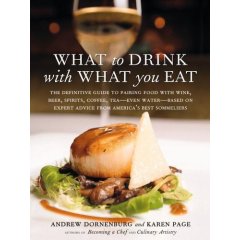
If you are interested in sake, you really should get the new book, "What to drink with what you eat (the definative guide to pairing food with wine, beer, spirits, coffee, tea - even water - based on expert advice from America's best sommeliers)." The authors, Andrew Dornenburg & Karen Page, have done an excellent job of bringing together experts on all drinks, including sake. The exciting thing for us is that Paul Tanguay of Sushi Samba and the sake web site Of Rice and Zen, along with several other sake afficianados, has contributed many comments.
Here's how the book works: first there is some introductory information including general food and drink pairing rules. Next there is a section that lists nearly any food you can think of, including cuisines such as Thai, occasional food such as Christmas foods, and shockers such as White Castle hamburgers, Domino's pizza, and Kit Kat candy bars. While flipping through this section, you might run into an entry such as the one for oysters, which offers several sommeliers opinions (sometimes widely varying) on pairing. Another section lists drinks alphabetically and for me, of course, the most interesting section is sake. Under sake there are subcategories, such as "general," aged, daiginjo, ginjo, etc. Under each of these are lists of foods that are recommended for pairing, those that are highly recommended and foods to avoid. There are only about three pages on sake in particular, but you will be surprised by how much information is packed onto those pages. One thing that I really love is reading notes by the sommeliers. Sometimes they completely contradict each other, but that is what we have all been learning about tasting - everyone's taste is unique.
Scattered throughout the book are recipes from famous chefs, all sorts of food and drink pairing and serving tips and plenty of gorgeous photos. At the back are examples of pairing menus from some great American restaurants (including Kai, one of my favorite New York restaurants), "desert island lists" from some of America's leading beverage experts, and a sample tasting sheet for you to copy and use.
You can get the book at amazon for about $23.00, which, I am telling you, is a steal. You should get it!
Saturday, October 28, 2006
International Virtual Sake Tasting
International Virtual Sake Tasting October 2006 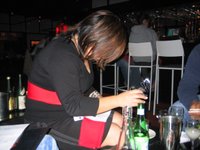
Taking notes
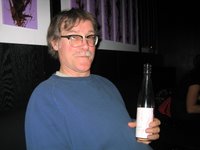
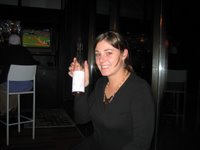
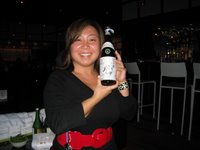
Mayu: Urakasumi "Zen"
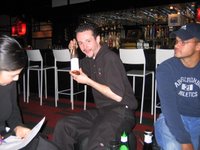
Our tasting was pretty casual and we relied heavily on Tim's tasting sheet which we really appreciated, especially as the evening progressed and our note taking tapered off a bit. Overall, the evening was a great success and we hope to participate in similar tastings in the future. The most important thing is that we all had a lot of fun and learned a lot.
The Sake Diaries joined with Melinda at Tokyo through the drinking glass, Tim at Urbansake.com, and Etsuko at Tokyofoodcast in what might be the first Virtual Sake Tasting ever held. The plan was simple. We picked a date, chose sake that was available to all of us, and gathered some friends together for our tastings. Each of us will report on our group’s tasting on our respective blogs. Special thanks go to Tim who created our attractive tasting sheets and who, along with Melanie, who did the bulk of the planning.
We picked four sakes that we would all taste and decided that we would each pick a fifth “wildcard,” which would be tasted by our group alone.
Our sakes:Shirakawago Sasanigori
Rihaku Wandering Poet”
Tamanohikari Omachi junmai daiginjo
Urakasumi “Zen” junmai ginjo
and my wild card
Nipponia Nippon junmai
None of these sakes were available for me locally, but that is the greatness of the internet and also modern day travel. The Shirakawago Sasanigori, Tamanohkari Omachi, and Urakasumi I got at True Sake on my recent trip to
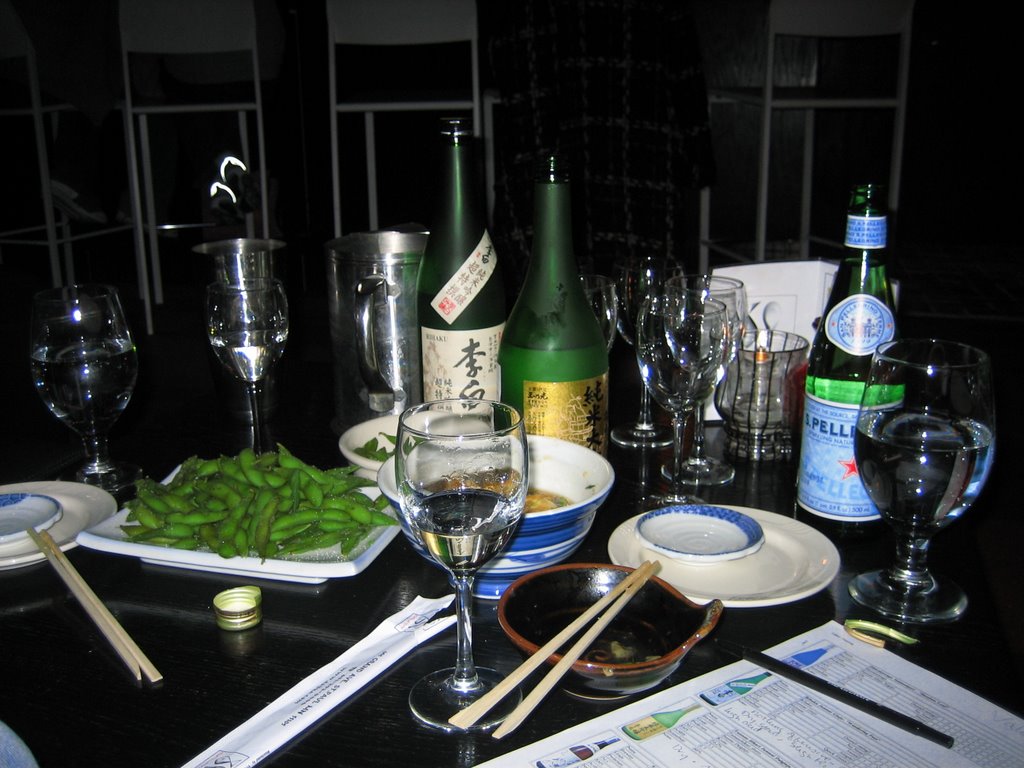
sake tasting at Saji Ya with yummy treats
For my tasting it was me, Rob, Mayu, Lauren, Mia and Nate. We decided to hold the tasting at Saji Ya for several reasons, not least of which is the food, including the special "rock star roll" that sushi chef Manny makes for us.
Now for the fun part: the tasting! There were two clear favorites of the night. The Nipponia Nippon “won” the tasting with 4 of us choosing this as our favorite. The second place winner was the Urakasumi “Zen” which Mayu and I chose.

Taking notes
Each sake was graded on a scale of 1 to 10 on the following parameters:
Overall rating 1-10
No Nose 1 – Fragrant 10
Sweet 1 – Dry 10
Simple 1 – Complex 10
Quick Finish 1 – Lingering 10
Here are the averages for each sake:
Shirakawago Sasanigori (Alc 15.3%, smv +0, acidity 1.5, polishing rate 60%)
This milky offering produced widely varying opinions from the tasters. I personally wasn't crazy about it and almost wondered if our bottle had gone bad...
Overall: 4.3
No nose to fragrant: 5.2
Sweet to Dry: 6.2
Simple to Complex: 6.5
Quick finish to Lingering: 6.2
Comments: "Wrong; medicinal or cleaning product," "tastes like clay," "excellent unfiltered variety; surprisingly sublte, floral," "chemical," "chalky, sour."
Rihaku "Wandering Poet” (Alc 15.2%, smv +3, acidity 1.6, polishing rate 55%)
I thought this was a nice, light, but well-rounded sake.
Overall: 5.2
No nose to fragrant: 4
Sweet to Dry: 3.7
Simple to Complex: 3.3
Quick finish to Lingering: 4.5
Comments: "Quiet, light; dry start, slightly sweeter middle, dry finish; high acid," "easy to drink, butterscotch," "great aroma; nice finish, easy to drink; sweet," "an 'everyman's' sake; would appeal to the masses, middle of the road fruit," "very smooth."
Tamanohikari Omachi junmai daiginjo (Alc 16.2%, smv +3.5, acidity 1.7, polishing rate 48%)
Maybe tied with Nipponia Nippon for my second choice.
Overall: 5.5
No nose to fragrant: 5.2
Sweet to Dry: 5.8
Simple to Complex: 5.8
Quick finish to Lingering: 6
Comments: "Dry, acid, light; light fruit at the middle and end; nose = cinnamon," "grassy; not a favorite; chocolate-ish; butane," "starts with sweet flavor; finish is dry, crisp."
Urakasumi “Zen” junmai ginjo (Alc 15.5%, smv +1, acidity 1.3, polishing rate 50%)
I had this before at Sakagura in New York and at the time, I felt that it was overwhelmed by the food I was eating with it. I'm glad that I had the chance to try it again...it was my favorite of the night!
Overall: 6.8
No nose to fragrant: 4.7
Sweet to Dry: 5.2
Simple to Complex: 6.2
Quick finish to Lingering: 6.8
Comments: "Fruit; melon; savory," lots of flavors; very fruity," "strong notes of licorice," "black licorice."
Nipponia Nippon junmai
According to the brewer: "Beautiful red color comes from ancient rice that is partially used to brew. Perfect balance of sweetness and acidity." The man behind the bar at the Ginza Fukumitsuya said this is light and smooth and tastes like rose wine.
Overall: 7.8
No nose to fragrant: 4.3
Sweet to Dry: 5.3
Simple to Complex: 5
Quick finish to Lingering: 6
Comments: "Sweet, fruit, apple juice," "no nose; maybe raspberry? stawberry? fruity," "very fruity; a little bit of Japanese plum flavor," "fabulous, super sweet, but not overwhelming."
The tasters with their favorite sakes:
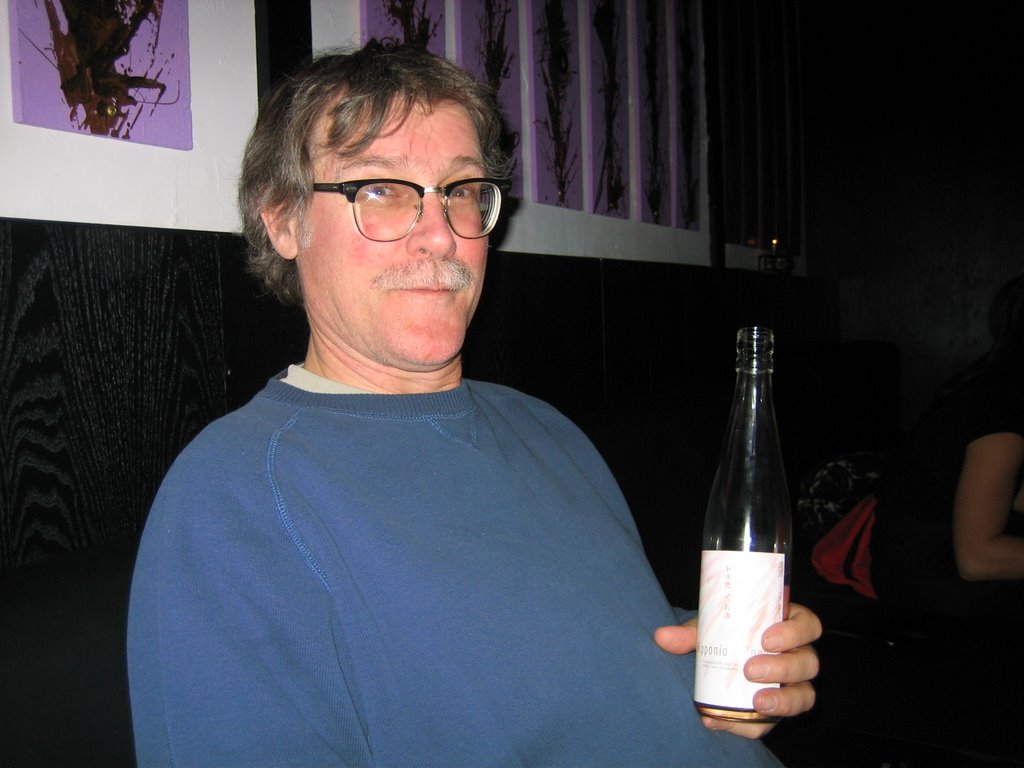
Rob: Nipponia Nippon

Lauren: Nipponia Nippon
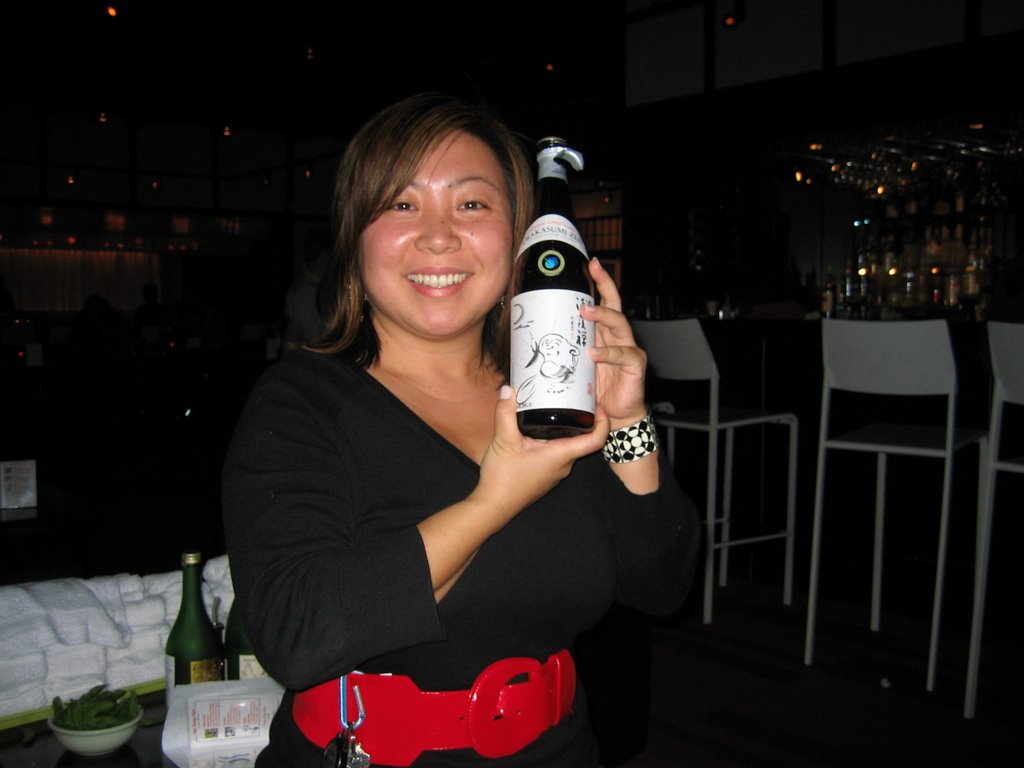
Mayu: Urakasumi "Zen"
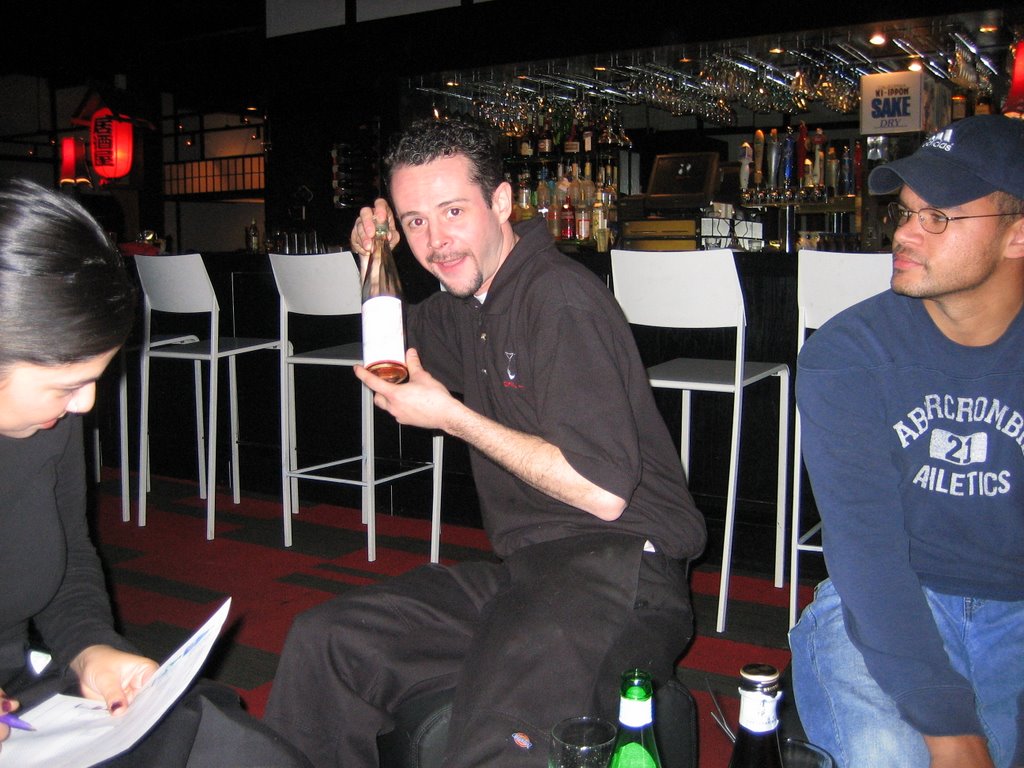
Nate: Nipponia Nippon

Mia: Nipponia Nippon
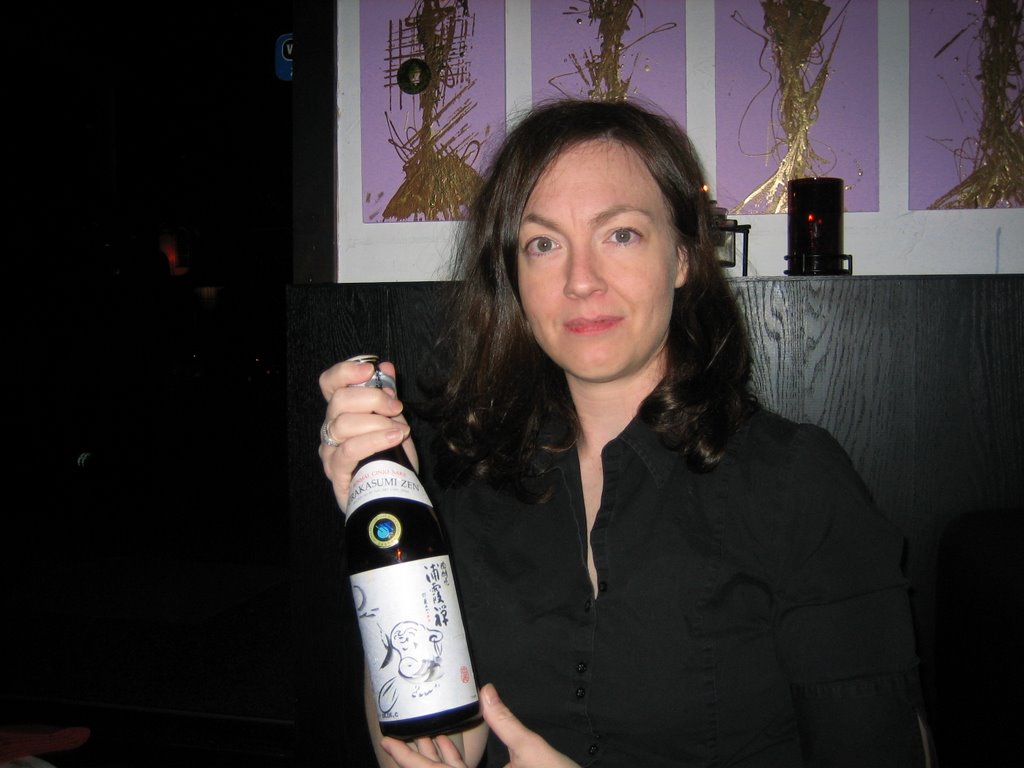
Valerie: Urakasumi "Zen"
Our tasting was pretty casual and we relied heavily on Tim's tasting sheet which we really appreciated, especially as the evening progressed and our note taking tapered off a bit. Overall, the evening was a great success and we hope to participate in similar tastings in the future. The most important thing is that we all had a lot of fun and learned a lot.
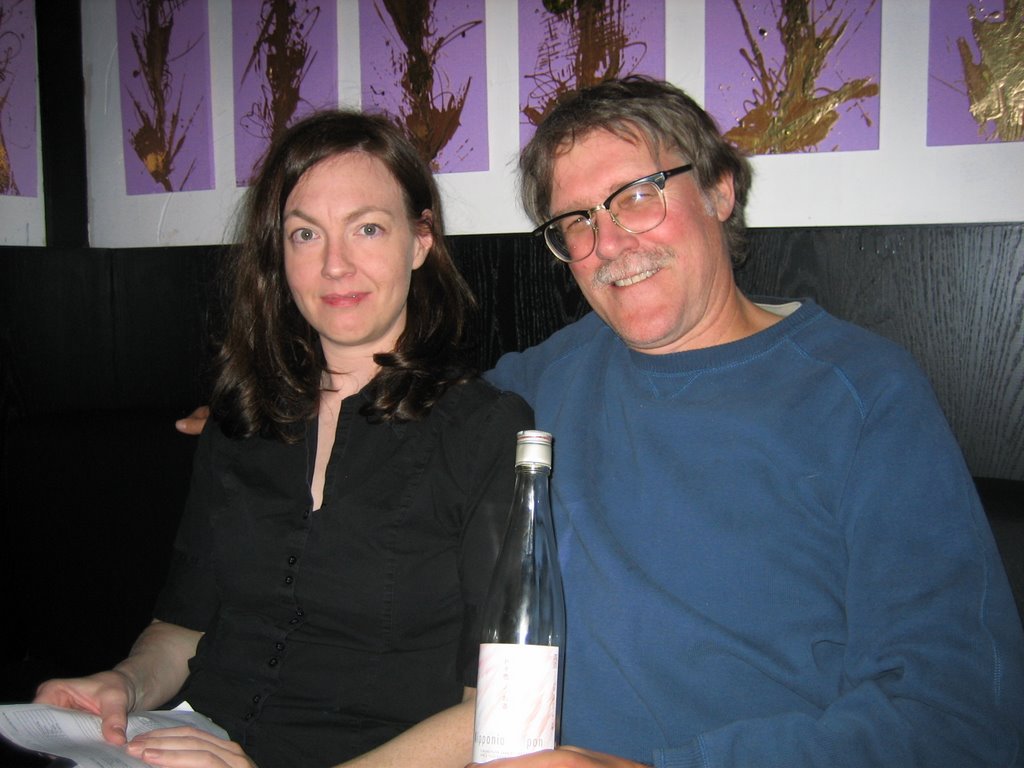
Rob and Valerie – a successful tasting
Thursday, October 19, 2006
Saké in Seattle: Umi Sake House
 While in Seattle, I was advised to stop by Umi Saké House and I'm glad that I did. According to their website, "Umi is a sophisticated twist on the Japanese Izakaya style of informal eating and drinking. The design of the restaurant mirrors a Japanese country house, including a “front” and “back” porch." The atmosphere is great and the saké list is even better.
 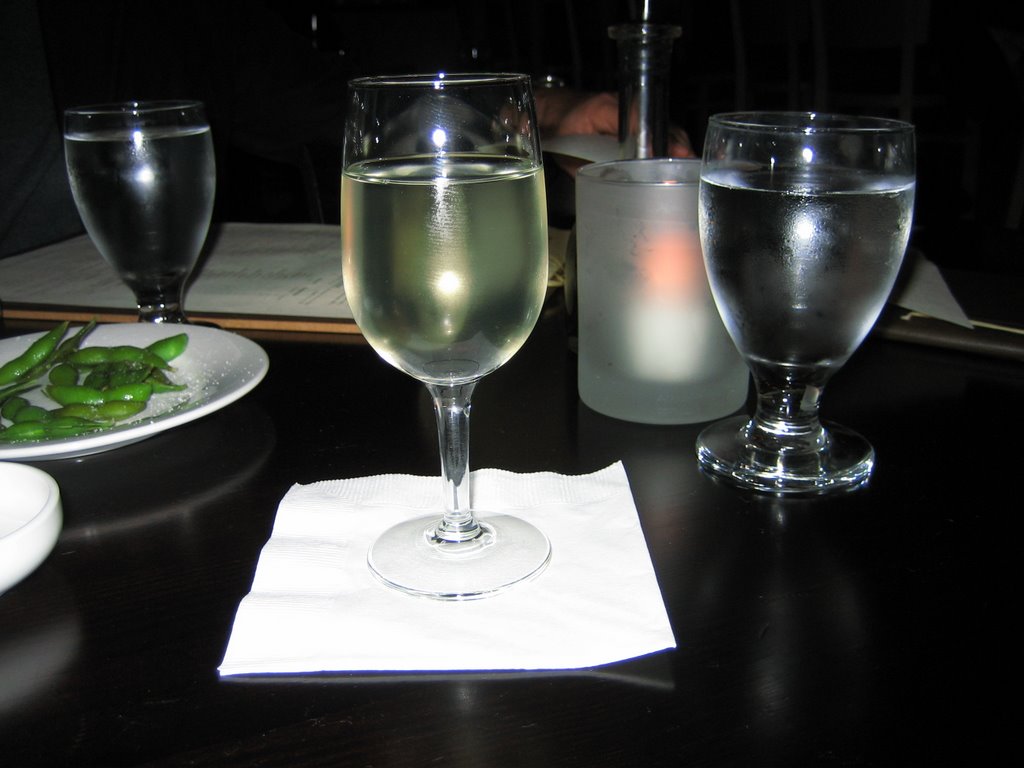 There were about 55 sakés offered by the bottle and 8 offered by the glass. I decided to try the Nanbu Bijin Junmai Ginjo ("Southern Beauty," Iwate Prefecture, smv +1) and I enjoyed it so much, I had a second glass. At the end of the meal, I had a small bottle of Zipang sparkling saké. I'm a fan of sparkling saké and I really liked this, which was very light with an apple candy nose, a quick finish and tiny bubbles. Rob took a sip and said, "Oh. 7-Up." To each his own... I left him to his mega can of Asahi.
 I love Japanese restaurants that serve food "izakaya" style, just as I love tapas and any shared plates, really. The menu at Umi is pretty extensive with sushi and sashimi, some creative rolls and a large selection of "appetizers." The meal started out right with a small dish of edamame that Umi brought to the table to get things going. Rob and I had black cod marinated in saké for three days, toro su-miso (tuna in a nice miso vinagrette), Spanish mackerel, yellowtail, salmon and a 1st Avenue roll (. The roll was really too big and we regretted ordering it as we were too full after it to order some other things we wanted to try. My favorite was the black cod in it's sweet marinade. Yum!
If you are in Seattle and you love saké, you must go to Umi Saké Lounge. You will be happy that you did!
Saturday, October 14, 2006
Saké Day Part Two
Saké Day Part Two, A recap of Nihonshu no Hi
True Sake hosted their second annual Sake Day celebration at Fort Mason this past October 1st and I'm happy that I had the opportunity to be there and join in the festivities. See the Sake Day website for details and great photos.
The fun started at the registration table as we signed in and picked our colored necklaces (mine was red!). Being a True Sake newsletter devotee, I knew that later in then evening there would be drawing and the color of your necklace would determine which of four sakés you would be trying. The welcoming reception was great - outside the Firehouse with a view of Alcatraz along with live music, we were served Chikurin Karoyaka "Bamboo Forest," a newly imported saké from Okayama Prefecture (Junmai Ginjo milled to 50%, smv +3, acidity 1.40). It was delicious and Beau Timken was a gracious host, keeping glasses filled. I tried to be restrained because I knew what lie ahead...
Inside we were seated and Beau offered a few words of wisdom. After reading his newsletters, I thought he seemed like a nice, funny, sincere, obsessed man. In person his truly big personality shines. He's very witty, very fun and very enthusiastic (but not stuffy) in his passion for saké. If this man can't bring saké to the American masses, no one can. He started the evening off with a raffle and my table won 2 bottles of Karen Coy (smv -23, acidity 2.9, alcohol 10-11%) which we dove right into to get things going.
I loved the way the evening was set up. Dinner courses (catered by Mari's Catering) along with accompanying saké were brought out one at a time, yet the dinner was casually paced and people were free to get up throughout the meal to visit the four saké stations set up at the back of the room and in a side room. The menu included:
Assorted nigiri sushi (maguro, unagi, salmon with yuzu tobiko, escalore with wasabi tobiko) and an-kimo (steamed monk fish liver in lemon cups with lemony ponzu)
*Shirataki Jozen Mizunogotoshi "Pure flavor" Tokubetsu Junmai from Niigata Prefecture (smv -1, acidity 1.4). Very clean in the typical Niigata style with a quick finish.
Noshi-dori (baked chicken) served with teriyaki sauce and tomato basil sauce, asparagus served with vinegar miso
*Takenotsuyu "Bamboo tears" Junmai from Yamagata Prefecture (smv 2, acidity 1.4). Less sweet; savory
Bacon wrapped shrimp in Nigori (sake) cream sauce, wasabi mashed potatoes
*Tsukasabotan "Tosa Space Sake" Junmai Ginjo from Koichi Prefecture (smv +5, acidity 1.5). This course was dubbed "Pigs in Space" by Beau who had this to say about the saké: "This sake was made using ingredients from outer space. Well sort of, in fact, it was made with brewing yeast that was sent to space on a Russian rocket. Did zero gravity have any effect? You make the call on this dry Ginjo that has a nose filled with steamed rice, whipping cream and green veggies tones. Think dry 0 as this celestial sake is clean, soft and shimmering with an overall dry earthiness that hides a hint of dry fruit elements. As close to the sake gods as one can get..."
Deep fried tilapia, peppers, and onions marinated in spicy vinegar, steamed stuffed daikon
*Narutotai "Beau-shu" Nama Ginjo Genshu from Tokushima Prefecture (smv +5, acidity 1.7). This was one of my favorite sakes - it comes in a can! but it tastes FRESH.
Beef marinated in miso and sake, edamame rice, Japanese pickles, Japanese custard
*Masumi "Yamahai Tsukuri" "Autumn Yamahai" Yamahai Junmai Ginjo from Nagano Prefecture (smv +2, acidity 1.8)
Sake creme brulee topped with sake blueberry sauce, green tea with gold flakes

The saké stations were all about testing your saké tasting skills.
Saké Station #1 was "Name that sake" and you were given 3 brews by a True Sake favorite brewery, Irakasumi. We tasted a Junmai, a Junmai Ginjo, and a Junmai Dai Ginjo. Despite receiving (from a mysterious, guru-type man) the excellent advice to "think of a fresh, clear, running stream" when thinking about the Junmai Dai Ginjo, I got all of these wrong! Well, I wasn't the only one and I got to this station at the very end of the evening - that's my excuse. I want another chance!
Saké Station #2 was called "Sake experiment" and here we got to play a "sake scientist" and discover how saké degrades over time. We tasted 2 sets of saké that had been inadvertently aged (meaning that the brewer intended that these saké be drunk fresh) and, to make it a bit more interesting, two of the saké had been opened on Sake Day 2005, exactly one year ago. So, we had:
Daishichi Kimoto Honjozo 1999
Daishichi Kimoto Honjozo 1999 - opened in 2005
Daishichi Kimoto Honjozo 2000
Daishichi Kimoto Honjozo 2000 - opened in 2005
I think I may have noticed more similarity in the saké opened last year than others. I definitely felt that you could see the relationship there. Others thought the saké opened in 2005 was really off, some were even a bit disgusted by it. I mainly thought it tasted flatter and sweeter. What the hell, no one got sick. This means don't throw out that saké that you opened last month and then forgot about before you give it a try... I didn't hear anyone really complain about the 1999 and 2000 sake that hadn't been opened, so, although the taste likely changed greatly from what the brewer had intended, old saké can still be worth drinking.
Saké Station #3 was a "Blind Tasting." At this station, six bottles were offered and everyone was told to choose their favorite. Another bit of fun: two of the sakés were the same! I did this station early in the evening and I was able to correctly guess the two identical sakés.
Saké Station #4 was called "Madhouse Sake" and it offered three sakés that were called "a little bit crazy." First was a Junmai Dai Ginjo that was left in a True Sake window for 5 months and a bottle of the same saké that had been stored properly. To me the exposed saké had an off smell and tasted similar, but lighter. Next, we tried a Kikusakari Gekkakow "vintage" saké which was aged by the brewery for 3 years. Finally, were tried a sparkling saké from Okunomatsu. This was made for Formula One racers to spray on each other in the victory circle at the Japanese Formula One races. I liked this light, bubbly saké.
And finally, "The Necklace Finale." Everyone would get a final saké, but which one would it be??
Kamenokou 17 milled to 17% $850/bottle
Kakunko milled to 27% $150/bottle
Dassai milled to 23% $70/bottle
Fu-Ki $4.95/bottle
I had a red necklace and I was a first runner up with the Kakunko. This was phenomenally delicious and I would definitely buy some of this for a special occasion. A highlight of the evening came when my wonderful tablemate David offered me not one, but TWO SIPS of his first prize Kamenokou. I must admit that I looked at David and asked "is it worth it?" I can't quote exactly what he said, but he reminded me that saké is more than just a bottle of alcohol with a price and more than a "good" or "bad" taste. Whether a saké is "good" is determined by a combination of the love and care that the brewer put into making it, the personal tastes of the taster, the occasion at which you drink it and the people who you drink it with. So, yes, this sake was worth $850 a bottle.

True Sake hosted their second annual Sake Day celebration at Fort Mason this past October 1st and I'm happy that I had the opportunity to be there and join in the festivities. See the Sake Day website for details and great photos.
The fun started at the registration table as we signed in and picked our colored necklaces (mine was red!). Being a True Sake newsletter devotee, I knew that later in then evening there would be drawing and the color of your necklace would determine which of four sakés you would be trying. The welcoming reception was great - outside the Firehouse with a view of Alcatraz along with live music, we were served Chikurin Karoyaka "Bamboo Forest," a newly imported saké from Okayama Prefecture (Junmai Ginjo milled to 50%, smv +3, acidity 1.40). It was delicious and Beau Timken was a gracious host, keeping glasses filled. I tried to be restrained because I knew what lie ahead...
Inside we were seated and Beau offered a few words of wisdom. After reading his newsletters, I thought he seemed like a nice, funny, sincere, obsessed man. In person his truly big personality shines. He's very witty, very fun and very enthusiastic (but not stuffy) in his passion for saké. If this man can't bring saké to the American masses, no one can. He started the evening off with a raffle and my table won 2 bottles of Karen Coy (smv -23, acidity 2.9, alcohol 10-11%) which we dove right into to get things going.
I loved the way the evening was set up. Dinner courses (catered by Mari's Catering) along with accompanying saké were brought out one at a time, yet the dinner was casually paced and people were free to get up throughout the meal to visit the four saké stations set up at the back of the room and in a side room. The menu included:
Assorted nigiri sushi (maguro, unagi, salmon with yuzu tobiko, escalore with wasabi tobiko) and an-kimo (steamed monk fish liver in lemon cups with lemony ponzu)
*Shirataki Jozen Mizunogotoshi "Pure flavor" Tokubetsu Junmai from Niigata Prefecture (smv -1, acidity 1.4). Very clean in the typical Niigata style with a quick finish.
Noshi-dori (baked chicken) served with teriyaki sauce and tomato basil sauce, asparagus served with vinegar miso
*Takenotsuyu "Bamboo tears" Junmai from Yamagata Prefecture (smv 2, acidity 1.4). Less sweet; savory
Bacon wrapped shrimp in Nigori (sake) cream sauce, wasabi mashed potatoes
*Tsukasabotan "Tosa Space Sake" Junmai Ginjo from Koichi Prefecture (smv +5, acidity 1.5). This course was dubbed "Pigs in Space" by Beau who had this to say about the saké: "This sake was made using ingredients from outer space. Well sort of, in fact, it was made with brewing yeast that was sent to space on a Russian rocket. Did zero gravity have any effect? You make the call on this dry Ginjo that has a nose filled with steamed rice, whipping cream and green veggies tones. Think dry 0 as this celestial sake is clean, soft and shimmering with an overall dry earthiness that hides a hint of dry fruit elements. As close to the sake gods as one can get..."
Deep fried tilapia, peppers, and onions marinated in spicy vinegar, steamed stuffed daikon
*Narutotai "Beau-shu" Nama Ginjo Genshu from Tokushima Prefecture (smv +5, acidity 1.7). This was one of my favorite sakes - it comes in a can! but it tastes FRESH.
Beef marinated in miso and sake, edamame rice, Japanese pickles, Japanese custard
*Masumi "Yamahai Tsukuri" "Autumn Yamahai" Yamahai Junmai Ginjo from Nagano Prefecture (smv +2, acidity 1.8)
Sake creme brulee topped with sake blueberry sauce, green tea with gold flakes
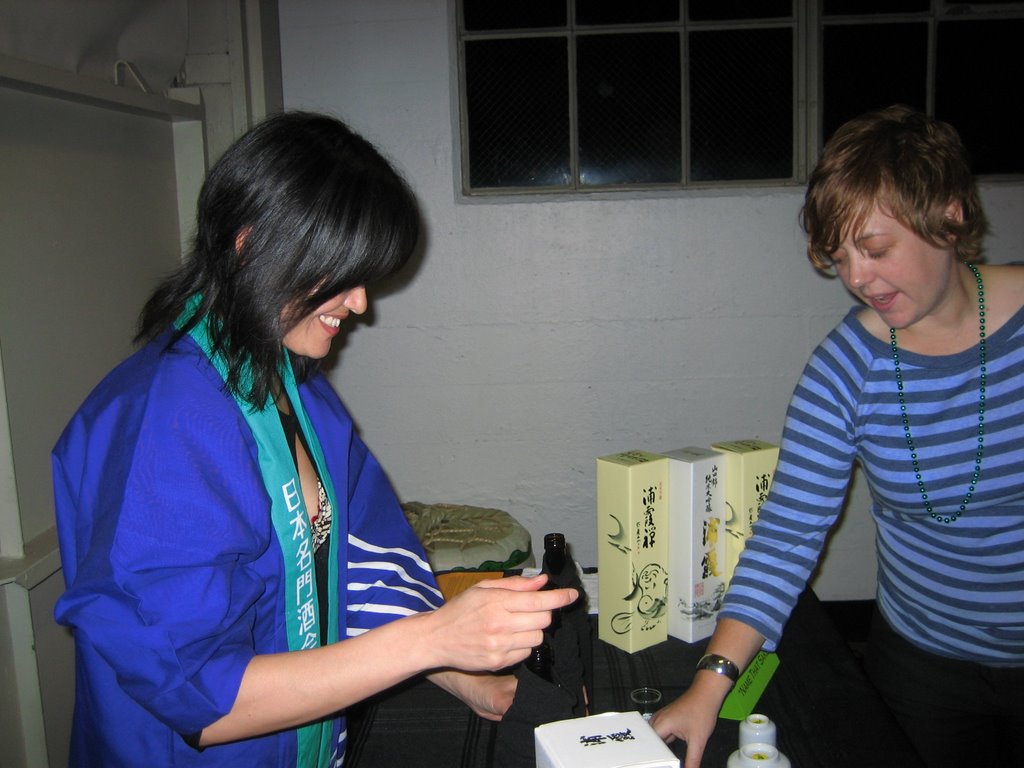
The saké stations were all about testing your saké tasting skills.
Saké Station #1 was "Name that sake" and you were given 3 brews by a True Sake favorite brewery, Irakasumi. We tasted a Junmai, a Junmai Ginjo, and a Junmai Dai Ginjo. Despite receiving (from a mysterious, guru-type man) the excellent advice to "think of a fresh, clear, running stream" when thinking about the Junmai Dai Ginjo, I got all of these wrong! Well, I wasn't the only one and I got to this station at the very end of the evening - that's my excuse. I want another chance!
Saké Station #2 was called "Sake experiment" and here we got to play a "sake scientist" and discover how saké degrades over time. We tasted 2 sets of saké that had been inadvertently aged (meaning that the brewer intended that these saké be drunk fresh) and, to make it a bit more interesting, two of the saké had been opened on Sake Day 2005, exactly one year ago. So, we had:
Daishichi Kimoto Honjozo 1999
Daishichi Kimoto Honjozo 1999 - opened in 2005
Daishichi Kimoto Honjozo 2000
Daishichi Kimoto Honjozo 2000 - opened in 2005
I think I may have noticed more similarity in the saké opened last year than others. I definitely felt that you could see the relationship there. Others thought the saké opened in 2005 was really off, some were even a bit disgusted by it. I mainly thought it tasted flatter and sweeter. What the hell, no one got sick. This means don't throw out that saké that you opened last month and then forgot about before you give it a try... I didn't hear anyone really complain about the 1999 and 2000 sake that hadn't been opened, so, although the taste likely changed greatly from what the brewer had intended, old saké can still be worth drinking.
Saké Station #3 was a "Blind Tasting." At this station, six bottles were offered and everyone was told to choose their favorite. Another bit of fun: two of the sakés were the same! I did this station early in the evening and I was able to correctly guess the two identical sakés.
Saké Station #4 was called "Madhouse Sake" and it offered three sakés that were called "a little bit crazy." First was a Junmai Dai Ginjo that was left in a True Sake window for 5 months and a bottle of the same saké that had been stored properly. To me the exposed saké had an off smell and tasted similar, but lighter. Next, we tried a Kikusakari Gekkakow "vintage" saké which was aged by the brewery for 3 years. Finally, were tried a sparkling saké from Okunomatsu. This was made for Formula One racers to spray on each other in the victory circle at the Japanese Formula One races. I liked this light, bubbly saké.

And finally, "The Necklace Finale." Everyone would get a final saké, but which one would it be??
Kamenokou 17 milled to 17% $850/bottle
Kakunko milled to 27% $150/bottle
Dassai milled to 23% $70/bottle
Fu-Ki $4.95/bottle
I had a red necklace and I was a first runner up with the Kakunko. This was phenomenally delicious and I would definitely buy some of this for a special occasion. A highlight of the evening came when my wonderful tablemate David offered me not one, but TWO SIPS of his first prize Kamenokou. I must admit that I looked at David and asked "is it worth it?" I can't quote exactly what he said, but he reminded me that saké is more than just a bottle of alcohol with a price and more than a "good" or "bad" taste. Whether a saké is "good" is determined by a combination of the love and care that the brewer put into making it, the personal tastes of the taster, the occasion at which you drink it and the people who you drink it with. So, yes, this sake was worth $850 a bottle.

Monday, October 02, 2006
Saké Day Part One
A day full of saké plus something from yesterday that I forgot.
Well, I didn't really forget, I merely neglected to mention because it wasn't in my saké notebook. True Sake! First of all, either tales of parking woes are exaggerated or we were very lucky to get a spot within a couple blocks. The storefront is narrow, so it might be easy to miss if driving by, but we found our way and I was not dissapointed. There were several customers in the store and the workers were so friendly. I had a list of a few specific sakés that I needed to find and they led me right to them. Then I spent time just looking at every bottle and every description. I bought several bottles and might have bought more if not for the current restrictions on liquids in carryon bags for air trips. Also not to be missed is the gorgeous collection of saké-related glassware. I was happy to find the hammered glass cups that I saw in Beau's book "Sake: A Modern Guide."
 Thanks to my friend Rick, later in the afternoon I was able to get to Berkeley and to Takara Sake USA. The highlight of the visit, besides the generous, free tasting, was the museum. It was a great opportunity to put good visual images to alot of the things I've read about the history of saké making.
Takara's web site says:
 They have a very useful diagram illustrating the process of saké making in the 19th century with items which the museum owns an example of conveniently labeled. They also have a similar example of this on their site.
I was excited when I saw several old books. Unfortunately, they mainly consisted of old brewery ledgers with no illustrations.

As for the tasting, they have a menu for the day listing the daily available choices. I lost track of how many sakés I tried because when the friendly lady behind the counter found out that I was very interested in saké "just for fun," she became very generous and let me try the majority of the items on the menu plus a few other things.
Some things that I tried with a few comments:
Sho Chiku Bai nama
Sho Chiku Bai organic nama (superfresh, alive, green)
Sho Chiku Bai nigori creme de sake (creamy, white chocolate liqueur, thick)
Sho Chiku Bai nigori (thinner than creme de sake, sweet, pina colada)
Sho Chiku Bai Tokubetsu Junmai (sharp but smooth, prominant alcohol taste)
Shirakabe Gura (tokubetsu junmai, imported)
Sho Chiku Bai Ginjo
Takara Sierra Cold
Plus a plum wine and several flavored sakes (fuji apple, lychee, raspberry, and plum)
Sake Day Part Two (a description of the True Sake Nihonshu no Hi festival!) will follow shortly.
Well, I didn't really forget, I merely neglected to mention because it wasn't in my saké notebook. True Sake! First of all, either tales of parking woes are exaggerated or we were very lucky to get a spot within a couple blocks. The storefront is narrow, so it might be easy to miss if driving by, but we found our way and I was not dissapointed. There were several customers in the store and the workers were so friendly. I had a list of a few specific sakés that I needed to find and they led me right to them. Then I spent time just looking at every bottle and every description. I bought several bottles and might have bought more if not for the current restrictions on liquids in carryon bags for air trips. Also not to be missed is the gorgeous collection of saké-related glassware. I was happy to find the hammered glass cups that I saw in Beau's book "Sake: A Modern Guide."
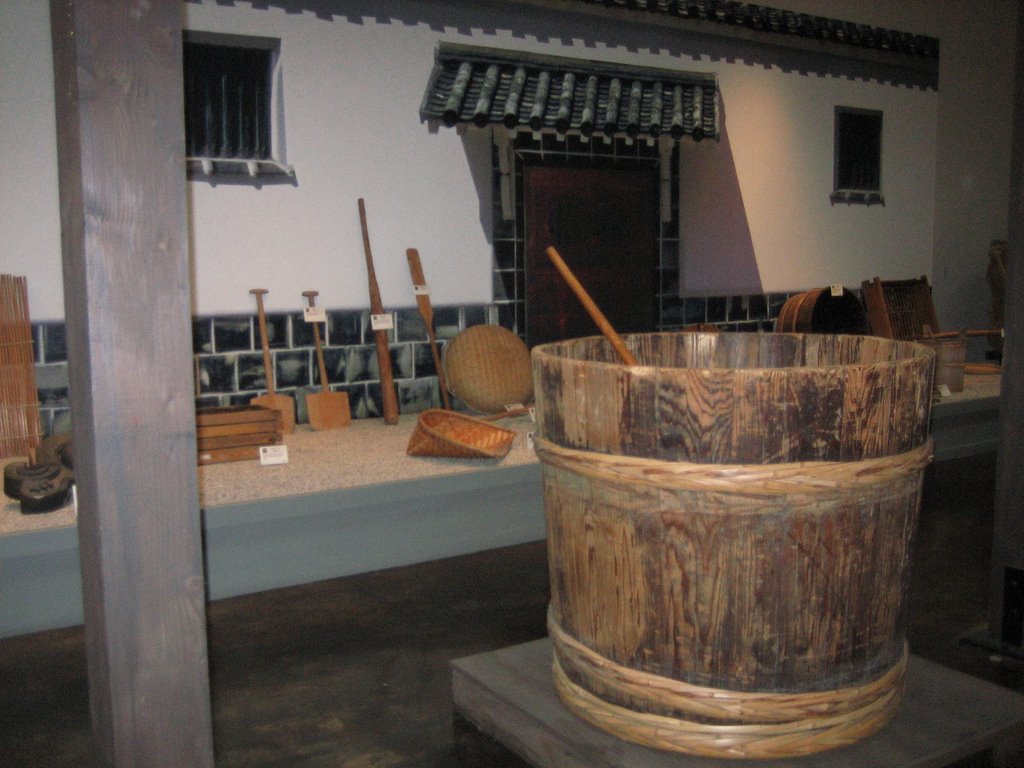 Thanks to my friend Rick, later in the afternoon I was able to get to Berkeley and to Takara Sake USA. The highlight of the visit, besides the generous, free tasting, was the museum. It was a great opportunity to put good visual images to alot of the things I've read about the history of saké making.
Takara's web site says:
The Museum features items and displays of interest to both experts and the general public. It includes an exhibit of the historical saké-making process, saké artifacts and implements collected by Takara Sake USA, and a history of saké-making in America. The collection is the only one of its kind in the U.S.A.
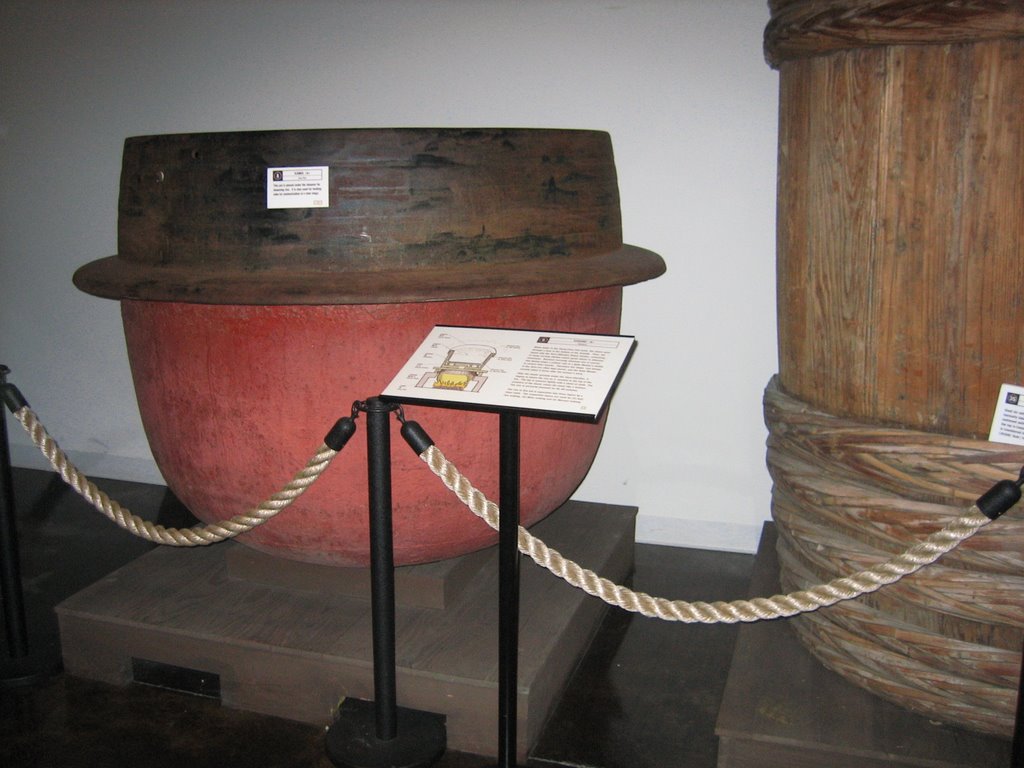 They have a very useful diagram illustrating the process of saké making in the 19th century with items which the museum owns an example of conveniently labeled. They also have a similar example of this on their site.
I was excited when I saw several old books. Unfortunately, they mainly consisted of old brewery ledgers with no illustrations.

As for the tasting, they have a menu for the day listing the daily available choices. I lost track of how many sakés I tried because when the friendly lady behind the counter found out that I was very interested in saké "just for fun," she became very generous and let me try the majority of the items on the menu plus a few other things.
Some things that I tried with a few comments:
Sho Chiku Bai nama
Sho Chiku Bai organic nama (superfresh, alive, green)
Sho Chiku Bai nigori creme de sake (creamy, white chocolate liqueur, thick)
Sho Chiku Bai nigori (thinner than creme de sake, sweet, pina colada)
Sho Chiku Bai Tokubetsu Junmai (sharp but smooth, prominant alcohol taste)
Shirakabe Gura (tokubetsu junmai, imported)
Sho Chiku Bai Ginjo
Takara Sierra Cold
Plus a plum wine and several flavored sakes (fuji apple, lychee, raspberry, and plum)
Sake Day Part Two (a description of the True Sake Nihonshu no Hi festival!) will follow shortly.
Subscribe to:
Posts (Atom)


 Posts
Posts


